What happens when everyone can prototype?
Everyone can prototype now. That doesn't make design irrelevant — it just proves how much of the job was never the prototype.
Everyone can prototype now. That doesn't make design irrelevant — it just proves how much of the job was never the prototype.
Tools like Figma AI, v0, Bolt, and Lovable have made it genuinely easy for anyone — a PM, a founder, an engineer — to generate a high-fidelity, clickable prototype in minutes. No design background required. That used to be the bottleneck: turning a requirement into something people could actually see and react to. Now it isn't.
So the debate that's kicked off is predictable. If anyone can prototype, what's a designer even for? Is this the death of design?
I think that's the wrong debate.
Prototyping was always the output, not the job
The actual job is what happens before and after the prototype: what are we assuming, what decision does this support, what breaks when a real user touches it, what edge case did nobody model. That's thinking work — discovery, validation, iteration. AI hasn't touched any of it. What it's sped up is the tactical craft: turning a decision into pixels. That was never the hard part.
The problem is that a high-fidelity AI prototype looks finished.
So teams treat it as finished. It reads as further along than a wireframe ever did, and that anchors everyone on a solution before it's been interrogated. The thinking gets skipped, not replaced.
Nobody's claiming that work right now. Not UX. Not PM. It's falling through the gap — and it compounds: five PMs using five different AI tools produce five different interaction dialects, with no one job responsible for making them cohere into one product.
Everyone can prototype now.
That's fine, genuinely. What I care about is whether the hard thinking — the framing, the validation, the edge cases — got done before the prototype became the answer.
AI that works has a job. One job.
Two 2025 studies on AI adoption, same technology, opposite outcomes — the difference is whether the AI actually removes work, or just moves it around.
I've been reading about AI adoption recently, and two 2025 studies stuck with me. Same technology, opposite outcomes.
The first looked at AI clinical scribes — tools that listen to a doctor's appointment and write up the notes afterward. Burnout among doctors using them dropped from 55% to 33%, and each appointment took 2.8 minutes less to document. The AI had one job: write the note. Nothing else.
The second looked at developers using general-purpose AI copilots. It found the opposite. 67% of developers spent more time on their work, not less — debugging code the AI had gotten wrong. 68% spent extra time fixing security issues the AI had introduced. The tool that was supposed to save time was, for most people using it, adding to their workload.
Same technology. Opposite results. The difference wasn't the model. It was what the AI was actually asked to do.
Scoped AI removes work. Broad AI adds it.
When AI is given one clear task — write the note, flag the anomaly, draft the reply — it takes that task off someone's plate. It's done. Nothing left to check.
When AI is broad — "here's a copilot, figure out how to use it" — it doesn't remove a task. It adds a new one: reading the output, checking whether it's right, fixing it when it isn't, deciding when to trust it and when not to. That's not a shortcut. It's a second job layered on top of the first.
This is why "AI-powered" isn't automatically a selling point. If the AI can't say exactly what it's replacing, it's probably not replacing anything — it's just adding a step.
The question worth asking
If your users aren't adopting your AI feature, this is the question I'd start with: what exact task does this replace? Not what it can help with — what does someone stop doing because this feature exists?
If you can't answer that clearly, your users can't either. And a feature nobody can name the job of is a feature nobody trusts enough to use.
Are you 100 percent confident?
A prompt that turned AI from a fast-answer machine into something closer to a thinking partner.
Most AI conversations optimise for speed: ask, generate, move on.
I tried this prompt recently and noticed the interaction changed quite a bit:
"Are you 100% confident in this strategy? If not, find all possible loopholes, suggest proper fixes, and run this loop until you are factually 100% confident." - source: The Neuron
The interesting part wasn't the output quality. It was that the AI stopped feeling like a fast answer machine and started acting more like a thinking partner — useful for getting it to sense-check all the ideas conversational agents throw at you.
The problem with helpful AI
Some notes from building a couple of AI tools that really forced this question — when AI removes effort, is it removing the thinking too?
Some notes from building a couple of AI tools that really forced this question — when AI removes effort, is it removing the thinking too?
AI reduces effort
Most AI product design today is built around a simple idea: reduce effort. Read less. Click less. Analyse less. Decide less.
For a lot of work, that's exactly right. If AI can write the SQL query, categorise support tickets, summarise a document, or automate a workflow, great. The value is the answer. Nobody benefits from doing those tasks manually.
But over the last few months, building AI products and agents, I've become interested in a different question: what happens when the thing being removed is the thinking itself?
Not all work is answer-finding work. Some work is judgment work. Product strategy is judgment work. Positioning is judgment work. Deciding what matters is judgment work. Understanding why you're stuck is judgment work.
In judgment work, the process of thinking isn't just a means to an end — it's where much of the value is created. And that's where I kept running into the same design tension: the more opinionated the AI became, the better the product felt. The less certain I became that it was helping people think.
The temptation to over-help
One of the tools I built is Untangle. It's for people who feel mentally overloaded but have no interest in journaling, mindfulness, or reflection exercises. The user records a voice note. The system structures what they've said and helps them find clarity — that's the goal, anyway.
What I discovered during development was that there's a very easy way to make the experience feel more magical: make the AI more interpretive. Instead of surfacing themes, explain them. Instead of identifying tensions, resolve them. Instead of helping users understand their thinking, tell them what's going on.
The outputs immediately felt more insightful. More useful. More satisfying. But they also became more authoritative. The AI was no longer helping users process their thoughts — it was starting to provide an interpretation of those thoughts. Was I building a thinking tool, or a very convincing explanation machine?
The same problem, a different layer
I ran into the same tension building a POV agent. The goal is simple: take a topic, map the conversation around it. What are the dominant narratives? What assumptions are people making? What's the contrarian view? What's getting attention, and what's being ignored?
The easy version of this product stops at "here's the best take." Many AI products do. But that wasn't what I wanted — the purpose wasn't to generate a position, it was to help someone develop their own. So the agent stops short. It maps the terrain, surfaces tensions, exposes gaps and blind spots — then hands the thinking back to the user. Less satisfying. The model could generate a conclusion, often a convincing one. But a convincing conclusion isn't the same thing as understanding.
Certainty and understanding are not the same thing
AI-generated conclusions can feel remarkably similar to understanding. That's what makes them powerful. It's also what makes them risky.
When a model explains your situation, it creates a feeling of clarity. When it gives you a position, it creates a feeling of certainty. Sometimes that certainty is deserved. Sometimes it isn't — and certainty and understanding are different things. You can understand something deeply and still be uncertain. You can also feel certain without understanding it at all.
The more I build with AI, the more I think product teams need to pay attention to that distinction.
A different question for AI products
Enterprise software has spent decades helping people access information. AI is helping software generate answers. The next challenge is figuring out when answers are actually the right output. For deterministic work, they usually are. For judgment work, I'm not so sure.
The question I find myself asking now isn't "can the model do this for the user?" It's "what understanding disappears if it does?"
The most delightful AI experience isn't always the most useful one. Sometimes the best thing an AI can do is help someone think a little more clearly for themselves.
I gave the same prompt to 3 AI app builders
Lovable, Figma Make, and Google Stitch — same one shot prompt, very different distance to done.
I gave the same one shot prompt to three AI app builders.
Not multiple iterations. Not refinement. Just one detailed prompt for a personal workspace app. The UX they produced was actually quite similar.
But the difference was in how far each got me:
Lovable — felt like a usable product. Coherent UX, working flows, strong responsiveness.
Figma Make — solid prototype. Same structure, but would need more work to feel polished.
Google Stitch — a design starting point. Good exploration, but missing pieces and consistency.
View Results
Lovable - https://lnkd.in/d2dh6P_A
FigmaMake - https://lnkd.in/dMrFBvFd
Stitch - https://lnkd.in/dAXGdTut
it's not just about what gets generated, it's about how much effort is still required after the first prompt. Same input, very different distance to "done."
I spent half a day trying to set up a way to stay updated on SaaS
Turns out it's faster to build your own tool than to find, trial, and configure what's already out there — and the tool you build ends up asking better questions than the ones you'd have bought.
Turns out it's faster to build your own tool than to find, trial, and configure what's already out there — and the tool you build ends up asking better questions than the ones you'd have bought.
Doing it the old way versus the new way
I spent half a day trying to set up a way to stay updated on SaaS.
It took surprisingly long just to figure out what tools were even available — then trial them, set them up, and suddenly I had a ton of data coming at me. None of it filtered for my angle.
Then I built my own agent. Took 30 minutes.
It has a company list I control, sorted into cohorts — legacy enterprise, AI-native SaaS, vertical AI, infrastructure and dev platforms, craft-led SaaS — and a persona that knows my role. I can point it at a single company, run a full cohort scan, or ask for a two-week "what's new" pulse, and get something back that's actually filtered for what I care about: what shipped, what's real versus positioning, who's winning the AI transition.
A few of the signals a recent cohort scan turned up:
Plan Mode is becoming the standard trust interface for agentic UX.
The invisible AI interface is arriving faster than design systems are ready.
Outcome-based pricing is the new battleground for enterprise.
That's the kind of read I used to have to piece together myself from changelogs and Twitter threads.
Anyone else surprised by how far this has come? It's easier to whip up your own tools than wrestle with what's already out there — and once you've built one, it starts asking sharper questions than the tools you'd have bought.
UX AI Transformation: Automation: Redefining User Experiences
This transformation examines how AI automation in SaaS is revolutionizing end-user experiences across various domains such as e-commerce, customer service, marketing, sales, HR, IT operations, and project management, while addressing user perceptions, concerns, and the need for explainable AI.
This post covers one of four transformations and is part of a larger blog series titled 'From Hype to Reality: A Practical Guide to AI-driven UX in SaaS'. You can find the first post of the series here.
AI Automation in SaaS: Redefining End-User Experiences
From elevators to ATMs, technology has long automated our experiences. But in recent years, SaaS (Software as a Service) has taken automation to a whole new level, thanks to AI.
Everywhere you look, there's AI streamlining tasks:
E-commerce: Shopify's Generative AI redesigns websites based on sales data.
Customer Service: Salesforce uses AI to classify cases and predict customer needs.
Marketing: HubSpot's AI optimizes content creation and customer segmentation.
Sales: LinkedIn Sales Navigator automates lead scoring and provides insights.
HR: Workday automates talent acquisition and payroll processing.
IT Operations: ServiceNow uses AI to categorize and respond to incidents.
Project Management: Asana's AI prioritizes tasks and schedules meetings.
The Impact of AI Automation: Shifting User Perceptions and Concerns
AI automation is changing the game, making experiences not only more efficient and personalized but also user are more satisfied. This research report states ‘there is a direct impact between the automation of tasks carried out by organizations and the satisfaction perceived by the user’
But with the perks come worries: Will automation cost jobs? Lead to loss of control? Degrade skills? And what about privacy and bias? These concerns aren't baseless—there are plenty of examples of bias in AI: from Workdays recruitment tools (in which there is an ongoing courtcase) and remember when amazon had to close down their biased AI recruitment tool), Google had to apologize for what it describes as “inaccuracies in some historical image generation depictions” with its Gemini AI tool. And we all have experiences the skill degradation, whether its doing math sums without a calculator or navigating around the city without google maps
Trust in the black box of automation is shaky. WIth little or no visibility into how AI decisions and results have been made, people see it as less fair that decision made by humans (as highlighted in the research In AI we trust? Perceptions about automated decision-making by artificial intelligence)
Designing with Automation: Addressing User Trust and Control
Here's the challenge: AI needs to explain itself. One of the critical and pervasive design issues of AI systems is their explainability… into AI’s functions and decisions. ’ as stated in Question-Driven Design Process for Explainable AI User Experiences.
We need Explainable AI (XAI) that users can understand and trust. Designing XAI means treating it as an interaction problem, not just a technical one.
We have to keep users in the driver's seat, empowering them with AI instead of letting it take over. Just like a navigator app guides you but doesn't decide where you go, AI should empower users without taking away their control.
UX AI Transformation: Diversification of Interaction Methods
This shift delves into the expanding array of interaction methods in SaaS, driven by AI advancements, including text and voice-based interfaces, biometrics, AR, and VR, and its impact on user engagement and privacy concerns.
This post covers one of four transformations and is part of a larger blog series titled 'From Hype to Reality: A Practical Guide to AI-driven UX in SaaS'. You can find the first post of the series here.
Expanding Interaction Methods in SaaS: AI's Impact on Interface Diversity
The way we interact with software is getting a major upgrade, thanks to AI. We're talking about everything from chatting with text and voice to using biometrics, augmented reality (AR), and virtual reality (VR). AI's driving this change, making it all possible.
NLP (Natural Language Processing) is turbocharging text-based conversations, while Automatic Speech Recognition (ASR) and computer vision are making voice and image interaction a breeze and there is an increasing amt of multi model LLMS (with open AIs chat gpt, googles Gemini, Anthropics claude3, leading the pack)
Biometric authentication is booming too, tripling in adoption between 2019 - 2022, thanks to AI making it faster and more accurate, reported by Grand View Research, thanks to AI improving its accuracy, speed, and the overall capability. There growing about of examples of biometrics being used outside of security to other usecases such as BioNimbus a marketing analytics company, which collects eye-tracking, GPS, and EEG data to track emotional excitement and improve the targeting of marketing campaigns.
AR is finally hitting its stride, especially in real estate and e-commerce, where it's changing how we shop. Shopify has had a significant role in that.
VR's still in the "Trough of Disillusionment,”. Whilst benefiting from the developments of AI, its high costs are holding it back.
Gesture-based interactions are getting some love for their natural feel, but we're reminded that tech should solve user problems first, not the other way around, thanks to the Humane Pin and the barrage of bad reviews it is getting. See Marques Brownlee’s infamous review
Navigating Diverse Interaction Methods: Evolving User Experiences
Typing and clicking aren't cutting it anymore. People want interactions to feel intuitive and natural. If they don't get it within seconds, they're moving on. Plus, folks are getting savvy about data privacy—biometrics raise some red flags, with people worried about misuse and consent. Getapp reported a decline in consumer trust in biometric technology in 2024
Designing for Diverse Interactions: Guidelines for UX Designers
With all these new ways to interact, designers need to step up their game. Forget about static screens and point-and-click interfaces—it's time to get creative. Learn from the leaders like Perplexity, who nailed a simple GUI for complex answers, or Google Maps, which seamlessly blends voice, touch, and visuals.
But with great power comes great responsibility. Biometrics, in particular, need extra care to ensure user trust and data security. And never forget to talk to your users—they're the ones who'll show you the way. So, be like Perplexity—not like humane
UX AI Transformation: The Rise of Conversational Interfaces
This transformation explores the growing integration of conversational interfaces in SaaS, powered by AI and NLP, and its implications for user interaction and experience
This post covers one of four transformations and is part of a larger blog series titled 'From Hype to Reality: A Practical Guide to AI-driven UX in SaaS'. You can find the first post of the series here.
Conversational Interfaces in SaaS: AI's Influence on User Interaction
Technology's become such a big part of our lives that we want to chat with our devices like we do with people. That's where conversational interfaces come in. Instead of following rigid steps or tapping on buttons, we can now just talk to our software like we would with a friend. This shift, powered by advancements in Natural Language Processing (NLP) and AI, has led to a surge in conversational interactions.
Chatbots, the helpful ones, are popping up everywhere— salesforce, microsoft, IBM, intercom, zendesk, hubspot, freshworks,, slack, zoho, zapier, ada, tars, manychat, overloop and many others are integrating them into their platforms. The rate of worldwide retail spending on chatbots is set to soar from $12 billion in 2023 to $72 billion by 2028 according to emarketer
They're not just for answering simple questions anymore; now we have Co-Pilots, more advanced chatbots that can handle complex tasks. First seen only in the market leaders: Salesforce, IBM, microsoft, amazon, now increasingly being developed across a diverse spectrum of SaaS, from customer service to project management, including clare, dixa, chatfield, bitrix24
Shaping User Experiences: The Influence of Conversational Interfaces
Users love the natural feel of conversational interfaces. It's like having a real conversation, but with your software. Research shows that people find these interactions more engaging and personal. They can get exactly what they need without navigating through menus and buttons. Plus, it's a game-changer for accessibility, making digital experiences easier for everyone. This study found that 70% of users chose ChatGPT-powered conversational interfaces over traditional techniques, citing convenience, efficiency, and personalization.
But it's not all sunshine and rainbows. Sometimes, these interactions can leave users feeling frustrated or confused, or feelings such as distrust, intrusion, inconvenience, as indicated by this literature review. Open-ended dialogue boxes can be vague, making it hard for users to know what to say. And not everyone finds it easy to express their needs in words. Chat GPT, the tool that propelled the conversational experience, was never meant to be a consumer product (It was a demo to internally test out the LLM versions) and is a good example of a tool, that whilst is very useful, has many usability issues
Crafting Conversational Experiences: Insights for UX Designers
As cool as conversational interfaces are, they're not always the best solution for every situation. Designers need to be careful not to jump on the chatbot bandwagon just because it's trendy.
It's crucial to test these solutions rigorously and learn from existing research. NNG research often writes about the usability issues with conversational experiences and Why Chatbots Are Not the Future covers some of the main issues.
Companies like Perplexity are paving the way with user-first AI products that prioritize simplicity and speed. Designers should take notes and focus on providing answers rather than creating complex conversational experiences. Henry Modisett,Head of Design at Perplexity AI, talks through his approach to Perplexities design here. By staying grounded in user needs and usability principles, designers can navigate the world of conversational interfaces more effectively.
From Hype to Reality: A Practical Guide to AI-driven UX in SaaS
This article offers a grounded examination of the current AI-driven transformation in SaaS user experiences, emphasizing the need for practical insights amidst the abundance of narratives.
Why read this article
In this article, you'll gain a pragmatic overview of the key AI-related changes impacting SaaS UX in 2024 and what UX designers should focus on to stay ahead of the curve.
As a UX designer with a keen interest in AI, I've noticed the abundance of exciting narratives about how AI will revolutionize UX. However, amidst this hype, I wanted to offer a grounded examination of the current transformation happening in SaaS user experiences. Rather than speculating on distant promises, I aim to shed light on the practical shifts occurring today among the myriad SaaS companies worldwide. I'm sharing my insights and references, hoping they prove valuable to fellow designers
Section 1:
Separating Fact from Fiction in SaaS
The Grand Promises of AI
Various thrilling (and occasionally disquieting) scenarios are discussed regarding how AI, especially generative AI, could reshape user experiences. Deloitte envisions a singular approach that will dominate customer acquisition and retention strategies. Greg Nudelman, in a podcast with Patricia Reiners, envisages fully personalized interfaces tailored to individual users, eliminating past concerns like accessibility. Jesse Lyu of Rabbit foresees a natural language approach so intuitive that users won't need to learn how to use it. There is talk of empowered agents interacting with each other and potentially rendering traditional app interfaces obsolete. Elon Musk takes a more ominous view, predicting AI will render not only apps but also human jobs obsolete.
Is it All Just Hype?
AI discussions are everywhere these days, prompting widespread skepticism. Whether it's chatting with your hairdresser or overhearing an AI-generated wedding speech, doubts about AI's real impact abound. However, history has shown that significant technological advancements, like the introduction of the GUI or the launch of the iPhone, often arise amid such skepticism.
Meteorites of Disruption
Meteorites, as des traynor calls them, (in a excellent talk), do hit. And when one hits everything gets disrupted, the tech landscape gets rewritten. And it seems AI is one of these meteorites. Despite being in its early days, AI, particularly general AI, is already leaving a tangible impact.
Studies from reputable sources like Forbes and MIT have consistently demonstrated AI's productivity gains, economic influence, and transformative effect on digital experiences. Platforms like ChatGPT have witnessed unprecedented growth, attracting 13 million unique visitors daily by 2024, as reported by Exploding Topics
AI's Integration in SaaS
SaaS is at the forefront of leveraging AI, with a substantial 35% of businesses already integrating it and 42% planning to do so in the near future, according to a survey by Tech Jury. Projections indicate that AI will permeate nearly every new software product and service by 2025, driving substantial revenue boosts within two years of their launch, as indicated by Simon-Kucher. SaaS Academy reports that global AI software revenue is predicted to surge to $118.6 billion by 2025, up from $9.5 billion in 2018, further underscores SaaS's high expectations.
Navigating the Reality
Despite the occasional exaggerations in AI narratives, such as the imminent arrival of General AI or the proliferation of robots, it's evident that significant disruptions are already underway, particularly in the domains of AI and SaaS. My goal is to pinpoint precisely where these changes are unfolding within user experiences, cutting through the hype to provide practical insights.
Section 2:
Top 5 Key UX Transformations in SaaS
1: The Rise of Conversational Interfaces
2: Diversification of Interaction Methods
3: Automation: Redefining User Experiences
4: The Era of Personalization
Conclusion
In conclusion, as UX designers, it's crucial to embrace the transformative power of AI in shaping SaaS user experiences. By staying informed about the latest advancements and trends, such as conversational interfaces, diversified interaction methods, automation, and personalization, we can navigate the evolving landscape with confidence. Let's prioritize user needs, usability principles, and transparency to create experiences that not only delight but also respect user privacy and control. Together, we can ensure that AI enhances, rather than detracts from, the human-centered nature of design.
UX AI Transformation: The Era of Personalization
This evolution explores the role of AI in enabling highly personalized experiences in SaaS, fueled by machine learning techniques like recommendation systems and NLP, and its implications for user engagement, privacy, and the need for transparency and user control.
This post covers one of four transformations and is part of a larger blog series titled 'From Hype to Reality: A Practical Guide to AI-driven UX in SaaS'. You can find the first post of the series here.
Personalization in SaaS: AI's Role in Customized Experiences
While personalization has long been a goal in SaaS, relying on static settings and generalized personas had its limitations. Now, with the advancement of machine learning techniques such as recommendation systems, Natural Language Processing (NLP), and deep learning, the era of personalization has dawned. From Deloitte reporting on the Segment of One, to Jacob Nielsen envisioning a future where everyone will have the perfectly auto generated accessible website the possibilities for personalized experiences are expanding rapidly, ushering in a new era where every interaction feels tailor-made for the individual user.
The pioneers in this realm have been leveraging their vast data sets and emerging technologies to deliver highly personalized experiences for some time. Amazon, for example, utilizes AI-powered recommendation engines to precisely match customers with products they desire. Netflix and Spotify employ similar algorithms to tailor content recommendations and playlists to individual user preferences.
While hyper-personalization, or "Segment of One", isn't yet ubiquitous across SaaS, notable examples of personalisation are emerging:
Canva: Utilizes user behavior data to suggest design templates and layouts that align with the user's previous projects or trending designs among similar users.
Notion: Offers a personalized onboarding experience by segmenting users during signup to showcase the most relevant features based on their needs.
Adobe's Sensei AI: Enables dynamic workflows in creative software that adapt to the user's style and preferences.
Grammarly: Provides personalized feedback tailored to the context of the user's writing and their specific goals, whether professional or casual.
Perplexity is in very early dates of exploring generative UI for its prompt input interface.
Personalized Experiences in Focus: Shaping User Engagement
There's a growing expectation for highly personalized experiences, fueled by the standards set by platforms like YouTube, Netflix, Amazon, and Spotify. Studies have consistently shown that personalization leads to higher engagement rates. However, the landscape of user experience regarding personalization is nuanced:
Privacy Concerns: While users demand personalized experiences, there's a simultaneous concern about data collection, usage, and storage. Overly personalized experiences can sometimes trigger a "creepy factor" when users become uncomfortably aware of extensive data monitoring.
Desire for Transparency and Control: Research indicates that users crave transparency and control over their data. They want to understand what data is being collected and have the ability to influence or opt out of data collection. Regulations like GDPR in Europe are driving companies to provide greater transparency and control to users.
Designing for Personalization: Balancing Expectations and Privacy
To navigate the complexities of personalization, designers should:
Get more familiar with the data and assessing it for biases.
Explore how to shape your static personas to be useful in this new dynamic world
Emphasize user control in personalization efforts such as adjusting what data the system uses to personalize the experience or opting out of certain types of personalization.
Provide transparency into where the experience is being personalised and how AI is being used
Clearly communicate the benefits of personalization and how AI enhances the user experience to build trust and acceptance.
In this era of personalization, balancing user expectations with privacy concerns is paramount to fostering trust and delivering exceptional experiences.
The Essential UX Designer's Roadmap: Navigating New Enterprise Software Projects with Ease
A comprehensive roadmap for UX designers tackling new projects in enterprise software.

Hey there, UX designers! Jumping into a new software project, especially in enterprise software, can be a wild ride, right? It's more than just good design; it’s about diving deep into the industry's nitty-gritty, understanding the product from the inside out, and grasping the unique needs of different users. Been there, done that! So, I’m sharing my go-to checklist that’s been a lifesaver. Hope it helps you as much as it did me!
Ramp up on the Sector: Learn the Language
Ever felt lost in a sea of jargon? I sure have. Getting a grip on the industry's lingo and the business model isn't just about fitting in; it’s like unlocking a secret code to bring valuable, impactful solutions to the table. See below for how I go about ramping up in a new industry.
Find out who and what is really driving the product priorities
Uncovering user pain points is key, but in enterprise software, there's more to the story. Who's buying? What are their goals? You've got to dig deeper to understand what's really driving the product's direction.
Understand the vast and complex user roles
In UX design for enterprise software, it’s essential to recognize that you’re not crafting experiences for a single user type, but for a network of diverse roles, each with unique responsibilities and requirements. Take hiring managers, for instance: their primary job is to recruit the right candidates and manage team performance. The software typically supports a fraction of these tasks, like enabling managers to select interview candidates or submit performance feedback. These tasks, or 'jobs to be done' (JTBD), often depend on actions from others (like receiving feedback from an interview panel) and various data points. Initially, it's important to avoid getting bogged down in the minutiae of individual use cases. Instead, focus on gaining a comprehensive understanding of the different user roles and their core JTBD, which will guide more effective and relevant design solutions.
Broadening Your View: Understanding the SaaS Product Ecosystem
In designing for SaaS (Software as a Service), it's crucial to look beyond just the application and comprehend the entire product ecosystem. This ecosystem is intricate and ever-changing. A single product doesn't exist in isolation; it's interconnected with various tools, data, and dependencies. These connections can occur within the same software suite or extend to third-party applications. Moreover, the software configuration isn't uniform across all customers. Factors like automated workflows, customizations, extensions, embedded widgets, and APIs contribute to diverse and complex interactions between customers and the SaaS product. The key challenge lies in crafting a seamless user experience that smoothly navigates through these different products and platforms. Achieving this starts with a deep understanding of the entire ecosystem.
Know the standards
Should all experiences be responsive, or just key user journeys? Is WCAG 2.1 sufficient? Are fun elements (like Trello's flying unicorns) appreciated, or are they seen as annoying? Is the goal to maximize data display on the screen? Standards can vary by industry, so it's essential to understand these before starting your design work.
Know the internal processes (from dev lifecycle or stakeholder management)
In enterprise software, UX designers don't just create interfaces; they are integral in shaping the product's journey from concept to delivery. Understanding internal processes is vital for several reasons including Streamlining Collaboration, Effective Advocacy for User Needs and Managing Expectations.
THE CHECKLIST
Ramp up on the Sector: Learn the Language
As a designer you should know
Industry basics such as the product and services in the industry and the business models (how they make money)
The jargon - Yes, learning to talk in jargon is key. Ever tried discussing 'Average Handle Time' with a Customer Care pro without knowing what it is? Spoiler alert: It doesn’t go well. Get comfortable with terms like AHT, FCR, CSAT in Customer Care, or Employee Engagement and LMS in HRM
The key technology and trends (such as HRIS in HCM and CRM & call routing for contact centers) as well as where the innovation is (such as chatbots in contact center and predictive analytics in HCM)
The common industry challenges (such as staff retention in frontline industries).
Pragmatic Tips for accelerating ramping up
Start with industry-specific reports, including Forrester, Gartner, and insights from industry leaders. Chat GPT can provide a helpful head start by summarizing industries and identifying thought leaders."
"Learn from internal experts, such as product scientists, product managers, and customer success teams. Schedule 30-minute meet-and-greet sessions, where you can spend the last 15 minutes interviewing them for their industry insights."
"Dig into past user research. Review the final reports but also listen to some actual interviews. This investment is worthwhile as it brings the users' experiences to life.
Find out what is really driving the product priorities
As a designer what should you know
What is the current business model for this product? (ie how does it make money)
How does the product fit into the long-term goals and the strategic direction of the company?
What are the buyers looking for in the market today ?
What is the front that vendors are competing on?
What is the sales strategy and targets?
And of course: What are the end users needs and challenges
Pragmatic Tips for accelerating ramping up
Review internal decks and recordings of strategy share outs to ramp up on the business strategy. You most likely will find that most of your questions will already be captured in desks.
Chat to the licensing team to understand how the product is being charged today and if they have any plans for changing it. The most common model is annual subscription based on feature access as well as additional fees for implementation but there are some new trends emerging such as charging per user or charging per usage. More innovative SaaS are exploring charging by outcome
Chat to Sales for their view of the Buyer, and what they are looking for. Ask for the quarterly win/loss reports to understand drivers. Look for areas where the experience is a driver.
Chat to Customer Support / success for their perspective on drivers behind customer engagement and churn
Lean on UXR to connect you to high level summaries of user issues, also pull ticket reports to see what end users are logging
Check early concepts with marketing / sales to get their view on how they will be received in the market. All too often significant time is invested in defining feature concepts before learning that they won't be received well in the market.
Build a mental model of the complex user roles and their jobs to be done
As a designer what should you know
What are each of the common User Roles for this industry,
What are their main responsibilities / job to be done and challenges
Which of these jobs to be done does your software assist with?
What are the common dependencies for the jobs to be done (examples could include dependencies of people such as an approval chain or dependencies on off line decisions by leaders or dependencies on third party data such as qualitative feedback from customers in the call center)
Pragmatic Tips for accelerating ramping up
Do desktop research on industry / ask GPT to summarize the user roles in the industry.
Ask UX team for their artifacts (personas, user journey maps etc)
If no artifacts exist at the user role & job to be done level, consider co ordinating a cross functional workshop to create one
Talk to end users, not only how they use the software, but also about their overall jobs to be done
Get a holistic understanding of the product ecosystem.
As a designer what should you know
Understand the core functionality and scope of the product. This includes understanding the primary use cases, key features, and the unique value proposition of the product.
Understand how this product works with the other products the company makes.What are the cross product journeys ? Are they seamless or full of friction?
What are the common third party integrations ? Understand common use cases for these integrations. How do real-world users benefit from these integrations? Are they utilizing the standard UX components ? What is their impact on performance?
Is there a Low-Code Integration Builder? Can non technical users successfully use this?
Does the product appear as apps in other products market place (such as salesforce)? how does the product maintains design and experience consistency when integrated with third-party apps from marketplaces like Salesforce.
Does it have its own marketplace for third party apps? Understand the support and resources available for third-party developers to enable them to build a consistent experience
Pragmatic Tips for accelerating ramping up
Use the product, as each of the user role, based on what their real JTBD and usecases are. Often this is very time consuming as you need to make sure you a) have the knowledge on who the users are and what their tasks are and b) get the right access rights and data set up on your account. This investment will stand to you.
Interact with the cross product journeys - Keep an eye out for UI consistency, shared navigation patterns, and common UX principles and well as obvious frictions such as different RBAC systems meaning the user needs to log in separately to each product.
Ask for architectural diagrams or flowcharts that illustrate how different parts of the ecosystem interact.
Watch recordings of sales demos and walkthroughs for that industry, as this will give you an opportunity to hear a) the use cases and b) how they are positioned to the customer
Learn from the integrations & ecosystem team (if one exists).
Find out what are the public APIs and ask what for and where they are commonly used.
Find out what are the most popular third party integrations
Talk to the Admin users who would have visibility into how the software is set up in their company
Know the standards
As a designer what should you know
What is the current accessibility standard [eg WCAG 2.0, WCAG 2.1 etc] and is there a plan to meet a higher level on some or all features?
What are the primary devices used by the enterprise's user base to access the SaaS product? What are the current breaking points supported ?
What are the design principles ? Is fun desired or is efficiency king? Is ‘simple’ or ‘ease to use’ important or is that just frustrating to the power / admin user who knows what they want? Do the different user roles expect or need different experiences (Admin / power users tend to prefer compact experiences with all capabilities easily available where less frequent casual users tend to prefer simplified, more engaging experiences)
The design system
The performance standards, and where in the product there are issues…such as performance lags at certain times of a day or with large data sets
Pragmatic Tips for accelerating ramping up
Get the official word on what standards are agreed up from the functional leads of UX and Eng and PM
Play with the Design System
Know the internal processes (from dev lifecycle to stakeholder management)
As a designer what should you know
Design Process:
Research Engagement: Understand how researcher are integrated into your project. Are they part of the project Squad? Or are they a supporting team? Know the process for requesting and prioritizing research.
Customer Interaction: Learn the protocol for reaching out to customers and end-users. Are there specific channels or procedures to follow?
Incorporating Feedback: Identify when and how to involve marketing and sales for feedback on design concepts.
Design System and UX Guidelines:
Familiarize yourself with the existing design system and UX guidelines to ensure consistency and alignment with brand standards.
Development Lifecycle:
Process Overview: Get a clear picture of the standard procedures from development to deployment.
Collaboration with QA: Understand how and when the UX team collaborates with Quality Assurance.
Review Timelines: Know when UX is involved in reviewing the features as they are being built.
Release Process:
Readiness Reviews: Find out if there's a launch readiness review and the UX team's role in it.
Bug Logging: Learn where and how bugs are logged and prioritized, both internally and from the customer's perspective.
Stakeholder Management & Communication:
Key Stakeholders: Identify the decision-makers and influencers for your product.
Engagement Levels: Understand how involved they prefer to be in design decisions.
Communication Norms: Grasp the standard communication protocols, including design reviews, update emails, and ad-hoc updates.
Practical Tips for Ramping Up:
For experienced designers, these processes might be routine. For newcomers, take time to learn and adapt.
Engage in desktop research and observe day-to-day activities.
Request process documents from team leads for a deeper understanding.
Consult wikis or internal knowledge bases for documented processes.
Pay attention to daily interactions and workflows to grasp the nuances of your organization's approach
And there you have it – your roadmap for navigating the thrilling world of enterprise UX design. Remember, it's a journey of continuous learning and adaptation. Keep this checklist close at hand, and don't hesitate to dive deep into the industry, understand the complex web of user needs, and gain a holistic view of the product ecosystem. Your designs will not only be visually appealing; they'll be powerful tools that make a real impact.
Happy designing!
Navigating the Human Experience: A Series on People Leadership for UX Managers
In this intro article to The Human Experience series, I share what I believe good managers should be responsible for, along with the frameworks I personally use to enable managers in this ever-changing landscape

Rising Expectations: The Demands of Today's Workforce
In the fast-paced and ever-evolving landscape of the tech industry, being a people manager has become more challenging than ever before. The expectations employees have of their managers are soaring to new heights. As the pandemic accelerated digital transformation and revolutionized remote work, old concepts of productivity were upended. Issues like work-from-home arrangements brought to light the need for flexible and inclusive approaches to work. Moreover, a heightened awareness of injustice and the call for diversity and inclusion have brought new meaning and purpose to the workplace. Employees now expect leaders and companies to be reflective of their values, and they have little tolerance for bad managers, just as they have little tolerance for bad user experiences in the digital world.
Challenges Amidst Transformation for People Managers
Simultaneously, companies are grappling with the very idea of the value of people managers. Economic tightening has put pressure on companies to streamline costs, leading to reduced budgets for operations and employee support. This challenging environment raises questions about the necessity of traditional managerial roles, leaving managers feeling the burden of saving money, increasing output, and proving their worth without the resources for team building and culture building events.
The Indispensable Role of Good Managers: Catalysts for Success
Yet, amidst this transformation, the role of a good manager remains invaluable to the business. Employee engagement, staff retention, and aligning teams with the company's strategic vision are just a few reasons why effective managers are crucial to a company's success
Unlocking Potential: A Series on People Leadership for UX Managers
In this blog series, as a UX leader and people manager myself, I will share my perspective on what I believe good managers should be responsible for, along with the tools and frameworks I personally use to enable managers in this ever-changing landscape. From fostering an enabling, empowering, and engaging environment for your team to conducting meaningful career conversations and effective weekly 1:1 meetings, I hope to equip fellow managers with the insights and resources they need to thrive in the tech industry's dynamic world.
As we navigate the challenges and opportunities of people management in the tech industry, and let's build a community of effective, compassionate, and growth-oriented leaders together.
The Ultimate Checklist for UX Leaders: Enabling, Empowering, and Engaging Your Team
In this article I share the expectations of an effective management as well as a useful checklist I use, with specific actionable tips

Introduction
The Impact of Effective People Management: A Journey for UX Leaders
It is a well-known fact that employees often join companies because of the allure of exciting projects and promising opportunities, but they ultimately leave due to their relationship with their managers. As a UX leader, I have always been committed to being the kind of manager that inspires loyalty and trust, the kind of leader that teams don't want to leave. However, I also recognize that being an effective people manager is not without its challenges, and I must admit that I haven't always gotten it right
Empowering UX Leaders: The Accountability Checklist for Success
Leadership, after all, is a multifaceted and nuanced art. What works for one team member may not resonate with another, and finding that delicate balance can be daunting. But, as a passionate learner and desire for self improvement, I have created a guide - a checklist – that outlines what I believe an effective manager is responsible for, that which I strive to hold myself accountable to.
As UX leaders, as we navigate the relentless demands of projects, deadlines, and pressures, this checklist will serve as a compass, reminding us of the fundamental principles of effective people management and guiding us to be the kind of leaders that inspire, uplift, and drive our teams towards unparalleled success. Together, let's build a community of exceptional UX leaders who not only design remarkable experiences but also nurture extraordinary talent and teams.

The checklist is available for download. In the pdf you will find specific tips tailored to each category. These tips serve as actionable guidelines to support your efforts in enabling, empowering, and engaging your team effectively.
Download Checklist (with actionable tip)
Understanding the Role of a UX Leader as a People Manager
As a UX leader, the responsibilities and challenges extend beyond technical expertise. Unfortunately, I've witnessed instances where UX leaders were merely operated as principal designers, neglecting the essential people management aspect. On the other hand, some found themselves caught in a middle management layer, disconnected from hands-on UX work and not involved in shaping the product and business strategies. In such cases, their roles were reduced to administrative tasks, resulting in a lack of respect and exclusion from critical conversations. Additionally, there were instances where people leaders confused people management with project management, leading to micromanagement and a lack of trust within the team. However, when UX leaders embrace their responsibilities effectively, they play a pivotal role in three core areas:
1. Product Vision: UX leaders ensure a user-focused product vision, differentiating the company and contributing to long-term success.
2. Systems: They set up and optimize systems and processes, enabling seamless operations within the team.
3. People: One of the most significant aspects of a UX leader's responsibility lies in managing people. By becoming effective people managers, UX leaders become multipliers of their team's impact. Designers and researchers feel enabled, empowered and engaged, leading to increased confidence and dedication to user-first values in their work. With a motivated and supported team, UX leaders can then focus upwards to drive a user-focused strategy and across to ensure the right systems and processes are in place across teams and departments.
The Checklist for Effective People Management
Let's dive into the three pillars of effective people management for UX leaders: enabling, empowering, and engaging your team. Each section contains points for you to reflect on yourself and encourage discussions with your team.
1. Enabling your team

Being an enabler means providing your team members with the necessary tools, resources, and support to perform their roles effectively. This includes ensuring they have access to the relevant training, up-to-date software and equipment, as well as the needed project information and business context. It also includes having a safe and inclusive work environment. It also involves clarifying roles, setting clear expectations for their role level as well as for the project, and removing obstacles that hinder productivity.
Indicators team members are not enabled:
Slow progress: Despite showing motivation and engagement during one-on-one meetings and project check-ins, team members make little progress on their assigned projects in between these interactions.
Difficulty Prioritizing Tasks: Designers or researchers may express feeling overwhelmed and struggle to prioritize tasks effectively. This can be a sign that they are not adequately enabled to manage their workload and may be missing essential information
Unresolved Issues: issues remain unresolved despite their attempts to seek assistance indicating they lack access to relevant training or information needed to address challenges effectively
Missed Deadlines: Projects consistently miss deadlines or require multiple extensions due to unforeseen obstacles or inefficiencies, indicating they are facing challenges that hinder their productivity and hinder their ability to meet project milestones.
Checklist for enabling your team
Ensure access to necessary Information, People, Resources and Support
Do they have access to the right information they need to do their job effectively ?
Do they have access to the right people they need / Do they feel there is good collaboration across functional teams?
Are the needed processes in place to support effective work?
Do they feel they have access to the resources (e.g., materials, equipment, technology, etc.) they need to do their job effectively?
Do they have the right skills or training needed to successfully deliver?
Clarifying Roles and Expectations
Do they have a clear understanding of what is expected of them (in relation to overall role or a specific project)?
Fostering a Safe and Inclusive Work Environment
Do they feel safe speaking up, sharing ideas and thoughts different to the teams?
2. Empowering your team

Empowerment involves trusting your team members to make decisions and take ownership of their work. This means as a leader, you delegate tasks appropriately. Or better yet, the team is set up in autonomous groups(such as cross functional triads) thus ensuring autonomy on the ground. There should be clear boundaries defining what's considered a milestone and when Check Ins are expected. Encourage open communication. You also offer constructive feedback and recognize achievements to boost confidence and motivation.
Indicators team members may not be empowered:
Consistent Micromanagement Requests: Consistently asking for detailed instructions or seeking frequent check-ins may indicate a lack of confidence in their decision-making and empowerment.
Limited Participation in Meetings: In team meetings or discussions, individuals who do not feel empowered may be less likely to voice their opinions, ideas, or concerns. (careful not to confuse with individuals preferred communication style)
Lack of Ownership: Individuals who do not feel empowered may exhibit a lack of ownership over their work. They may not take responsibility for outcomes and may blame external factors for challenges.
Lack of Initiative: If individuals show a lack of initiative and only complete tasks when explicitly assigned, it may indicate a lack of empowerment.
Checklist for empowering your team
. Encouraging Autonomy and Ownership
Do they have a clear understanding of what is expected of them in relation to the specific project? (as previously listed)
Is a team and pod structure set up to support autonomy and collaboration ?
Do they know what the boundaries of their decision making authority is and at what stages to check in?
Do they feel you will have their back on the decisions they make?
Supporting decision making ability
Do they know the right priorities of what to work on and can get access to help prioritizing when needed?
Do they feel comfortable and are they effective at making decisions?
Offering Constructive Feedback and Recognition
Do they feel they receive timely and helpful feedback ?
Do they feel recognised?
3. Engaging your team

Employee engagement is about cultivating a positive and supportive work environment where team members feel connected to their work, colleagues, and the organization's goals. As a leader, you communicate the company's vision and values, as well as support individuals on their own career vision and development plans. Encourage open dialogue, and recognize and celebrate achievements. You also promote work-life balance and support your team's well-being.
Indicators team members may not be engaged:
Negative Attitude: Disengaged individuals may display a negative attitude towards their work or the organization.
Decreased Interaction with Leadership: Disengaged team members may avoid interacting with their leaders or managers. They may be less likely to seek guidance or feedback.
Limited Participation in Meetings: Team members who do not feel engaged may contribute minimally or remain silent during team meetings or brainstorming sessions. They may avoid sharing their ideas or opinions
Lack of Enthusiasm: Team members may appear disengaged and lack enthusiasm for their work. They may seem indifferent or unmotivated about the projects they are working on.
Lack of Interest in Professional Development: Engaged team members often show interest in their professional growth and seek opportunities for skill development. Disengaged individuals may display little interest in improving their skills or pursuing new challenges.
Checklist for engaging your team
Communicating Vision and Values
Can they see a clear link between their work and this company's strategic objectives?
Do they have access to timely company info and know how changes will impact them ?
Providing Career Development Opportunities
Does their job make good use of their skills today ?
Do they have a career and personal dev plan and believe they can have meaningful career opportunities here?
Building a Positive and Supportive Team Culture, promoting Work-Life Balance and Well-being
Do they feel like a valued part of the team?
Do they feel listened to and respected?
Do they feel they can manage their job responsibilities in a way that enables healthy work-life balance?
How to Implement the Checklist

To effectively implement the checklist
it's essential not to overwhelm yourself by trying to focus on all areas at once. Begin by identifying which specific area requires attention the most. Pay attention to the aspects that seem to cause the most frustration among your team or stakeholders, or those that have a negative impact on your time and productivity.
Determining the areas that need improvement
you can utilize various methods, such as conducting a team assessment through workshops, surveys, and meetings. Additionally, analyzing team metrics, including turnover rates and project timelines, can provide valuable insights. Furthermore, consider conducting stakeholder interviews and actively listening to your team members to understand their perspectives and concerns.
Driving improvement
Once you have identified the focus area, it's time to drive improvement. Start by organizing workshop sessions to troubleshoot the root causes and generate ideas for necessary changes. Establish a clear team goal related to the identified area and encourage all team members to take ownership and contribute to achieving it. Review the existing systems in place to identify any aspects that support or hinder progress and be prepared to make changes as needed.
The checklist is available for download. In the pdf you will find specific tips tailored to each category. These tips serve as actionable guidelines to support your efforts in enabling, empowering, and engaging your team effectively.
Download Checklist (with actionable tip)
Conclusion
In the dynamic world of user experience, a UX leader's responsibilities are undeniably vast and challenging. From crafting a user-focused product vision to optimizing systems and processes, their plate is full. However, it is the realm of people management that presents the most complexity and nuance. As UX leaders and practitioners, we hold ourselves accountable for delivering exceptional experiences through well-defined systems and frameworks. Likewise, it is imperative that we extend the same diligence to our people management practices, ensuring our design teams are engaged, empowered, and enabled. The checklist we've explored here serves as a valuable framework in this pursuit.
Mastering the Art of Employee-Led 1:1 Meetings: A Simple Template for Effective Conversations
I introduce and share my tried and tested framework for employee lead 1:1s

Download the 1:1 template for effective syncs with your team : 1:1 Template [For Manager & Team Member]
Are your 1:1 meetings with your team turning into mundane status updates, or disconnected casual chats? It's time to take charge and make these meetings truly valuable! As a manager, your goal is to empower your team members and foster their growth and development.
I have tailored and tweaked the format of how I structure my 1:1 conversations many times, until I have landed on this one simple template that enables effective conversations.
Introducing the employee-centric 1:1 template. Designed to elevate your conversations and create a positive work experience.
1. Starting Strong: How Are You Feeling This Week?
Kicking off with a personal check-in sets the right tone. Ask about their weekend and how they're feeling. This builds rapport and establishes a positive connection. If they're facing challenges, take the time to discuss and understand - it's essential to be there for your team.
2. Celebrating Success: Acknowledge this weeks wins
Recognizing your team's hard work and dedication goes a long way. Encourage them to acknowledge their own wins, and as their manager, add to the list to show you notice and value their efforts.
3. Staying Goal-Focused: Review Progress
Avoid mundane status updates and focus on goals. Have your team capture their progress in advance. This keeps their eyes on the prize and reinforces goal priorities over busy work. As their manager, review and note any areas for discussion.
4. Navigating Challenges: What Help Is Needed?
Challenges are a part of growth. Be aware of what your team is facing, and offer support and guidance. Empower them to identify solutions themselves - remember, you're a coach, not just a problem-solver.
5. Empowering agenda: What Items Does the employee want to discuss?
This is the core of the meeting - let your team come prepared with topics they want to discuss. Prioritize their topics, ensuring they drive the conversation. Whether they need a sounding board, guidance, or connections, you're here to support them.
6. Valuable Feedback: Share and Seek
Create a safe space for feedback - it's a two-way street. Encourage your team to share their thoughts on what they need from you as their manager. If they're hesitant, ask reflective questions based on specific events to prompt their feedback. Also your opportunity to give timely and constructive feedback
7. Fostering Growth: Any Career Opportunities Ahead?
Keep your team's career development in mind. Reflect on their goals and consider growth opportunities in the coming weeks. Nurturing their career aspirations is a vital part of your role.
8. Agree the Actions:
Note Any Agreed-Upon Actions Capture agreed-upon actions to ensure accountability and clarity. Define expectations and timelines, making follow-through easier for both you and your team.
Download the 1:1 template for effective syncs with your team : 1:1 Template [For Manager & Team Member]
Embrace the employee-centric 1:1 template to create a dynamic, growth-oriented work environment. By empowering your team members and fostering open communication, you'll witness the transformative impact it has on their success and your team's overall performance.
Unlocking Growth Together: Introducing a Quarterly Career Conversations Framework
I introduce a framework for facilitating career & development conversations.

Download the 5 'C's Career Conversations Framework here: Career Conversation - Master template
Hey there, people leaders. I'm excited to share with you a powerful framework that has been transforming career conversations within my team. I call it the "5 'C's Career Conversations Framework," and it's all about fostering growth, development, and collaboration.
So, what are the 5 'C's, you ask?
Let's dive right in!
Contribution:
We start by exploring the incredible value each team member brings to the table. We chat about their recent contributions, successes, and goals for the next quarter. It's a chance to celebrate wins and set our sights on new horizons.
Capability:
Next up is a deep dive into knowledge, skills, abilities, and experiences. We discuss areas of growth and development over the past three months and pinpoint what they'd like to learn and achieve in the next quarter.
Connections:
Building strong relationships is key to success. We talk about the connections they've nurtured and explore opportunities to expand their network. After all, success is sweeter when we rise together.
Career:
In this section, we delve into their career aspirations and identify any desired changes in their current role. It's all about helping them carve a path that aligns with their dreams.
Compensation:
Finally, we touch on recognition. Feeling valued is essential, and we discuss ways to ensure our team members feel appreciated for their hard work and dedication.
Using the framework is simple!
Before the conversation, team members answer the questions in the "Career Conversations - Employee Version" and share it with me. I then complete the "Career Conversations - Manager Version."
During the conversation, they take the lead, while I provide coaching and prompts from the manager version.
Afterwards, they update their "Career Conversation Doc" based on our chat and set three personal development goals for the quarter.
Download the 5 'C's Career Conversations Framework here: Career Conversation - Master template
I've seen incredible growth and strengthened bonds within my team since implementing this framework. It fosters a culture of openness, support, and personal development. If you're curious to try it out, you can download the framework through the link below.
Let's unlock our full potential and grow together
End-of-Week: People Leadership Mastery: Weekly Effectiveness Checkpoint
The end-of-week reflection checklist empowers you to consistently nurture a positive work environment, support your team's growth, and refine your leadership approach.

As a people manager, our responsibilities are vast and can sometimes overwhelm us amidst deadlines and project demands. It's essential to pause, reflect, and ensure we stay true to the core of effective leadership.
To help me (and you) thrive as a people leader, I've designed a pragmatic and comprehensive end-of-week reflection checklist that I refer to every Friday morning. It provides me with valuable insights into my performance, and keeps me accountable for taking tactical actions to enhance my effectiveness before the week ends.
I have a reoccuring block in my calendar on friday mornings called ‘people leadership powerup’. It is set to 30 mins which allows 10 mins to do the reflection and 20 mins to take the actions afterwards.
End-of-week reflection checklist
Communication:
Did I effectively communicate all relevant information to my team and stakeholders this week?
Did I actively listen to my team's perspectives, encouraging open dialogue and valuing their input?
Are there any team members left awaiting updates on initiatives or tasks under my responsibility?
Team Recognition and Feedback:
Did I seize all opportunities to acknowledge and appreciate my team's hard work and accomplishments this week?
Were there moments when I could have provided more timely and constructive feedback?
Empowerment and Development:
Did I maintain a coaching approach throughout the week, empowering my team members to take ownership of their work?
Are there tasks on my plate that could have been better delegated to others, fostering their growth and development?
Have I identified growth opportunities for individual team members and provided the necessary support to pursue them?
Team Engagement & Inclusivity:
Did I proactively foster an inclusive culture by making space for relationship-building activities within the team?
Did I actively encourage collaboration, ensuring that everyone's contributions were respected and valued?
Have I created a safe and calm environment for my team to thrive and express their ideas freely?
Work-Life Balance and Wellbeing:
Have I encouraged and supported my team in maintaining a healthy work-life balance throughout the week?
Did I prioritize their physical and mental wellbeing by promoting self-care and stress management?
My Own Balance:
Have I actively sought feedback from my team and peers about my leadership and areas for improvement?
Am I effectively managing my workload and staying within a balanced threshold for work commitments?
Am I maintaining my own work-life balance and prioritizing my physical and mental wellbeing?
Next Steps (after reflection):
Identify 3 quick actions you can take today before the week ends to enhance your leadership and better support your team.
Determine 1 key area you want to focus on and improve next week to address any gaps or challenges and elevate your leadership impact.
This end-of-week reflection checklist empowers you to consistently nurture a positive work environment, support your team's growth, and refine your leadership approach. Remember, the journey of growth and improvement is ongoing, and with each week's end, you'll inch closer to becoming an even more impactful and inspiring leader
End-of-Week Strategic Navigator: Stay on Course with Just 30 Minutes
Introducing the "Strategic Navigator," a weekly 30-minute session to maintain a focused and elevated view of strategic goals

As a busy UX leader juggling multiple projects and teams, it's easy to lose track of our most important areas of focus—the ones where we can make the greatest contributions. But fear not! I've got a simple yet powerful solution that has been a game-changer for me and can benefit you too.
Introducing the "Strategic Goals Navigator," a brief 30-minute session I conduct every Friday. This practice helps me maintain a focused and elevated view of where I'm spending my time, ensuring I stay aligned with my strategic goals. I'm excited to share this valuable technique with you!
Here's how it works:
1. Reflect on Your Strategic Goals:
Take a moment to review and remind yourself of your strategic goals.
2. Acknowledge progress this Weeks:
Reflect on the progress you made towards your goals during the week. Celebrate successes and acknowledge where fell off course
3. Identify Distractors:
Note any factors that derailed you from your strategic path this week. If certain distractions or patterns keep recurring, be honest with yourself, and commit to addressing them systematically.
4. Determine Your MITs (Most Important Tasks) for next week:
Identify the Most Important Tasks that will significantly advance you towards your strategic goals next week. You should only commit to approach 3 so This is more an exercise of clarifying to yourself whats not going to get done next week
4. Set up next week for success
Whether it's blocking time on your calendar or scheduling crucial conversations, take proactive steps to set yourself up for success. Also for those tasks that will get delayed as they are not part of your MIT, push them out, and let stakeholders know, so you have some breathing space
How to Implement the Navigator:
Create a Recurring Block: In your calendar, set up a weekly recurring block on Friday mornings, titled "Strategic Goals Navigator," for just 30 minutes.
Engage in Reflection: During this session, spend the first 10 minutes reflecting on your strategic goals, progress, and potential distractors.
Take Action: Next, invest the remaining 20 minutes to take immediate actions based on your reflections. Prioritize and plan for the upcoming week to ensure you remain on course.
By incorporating this simple yet impactful practice into your weekly routine, you'll find yourself better aligned with your strategic goals, focused on your Most Important Tasks, and prepared to tackle the following week with confidence.
End-of-Week Task Blast Hour: For Conquering Your Tasks
Task Blast Hour empowers you to reclaim control over your tasks, maximize your productivity, and create space for rejuvenation.
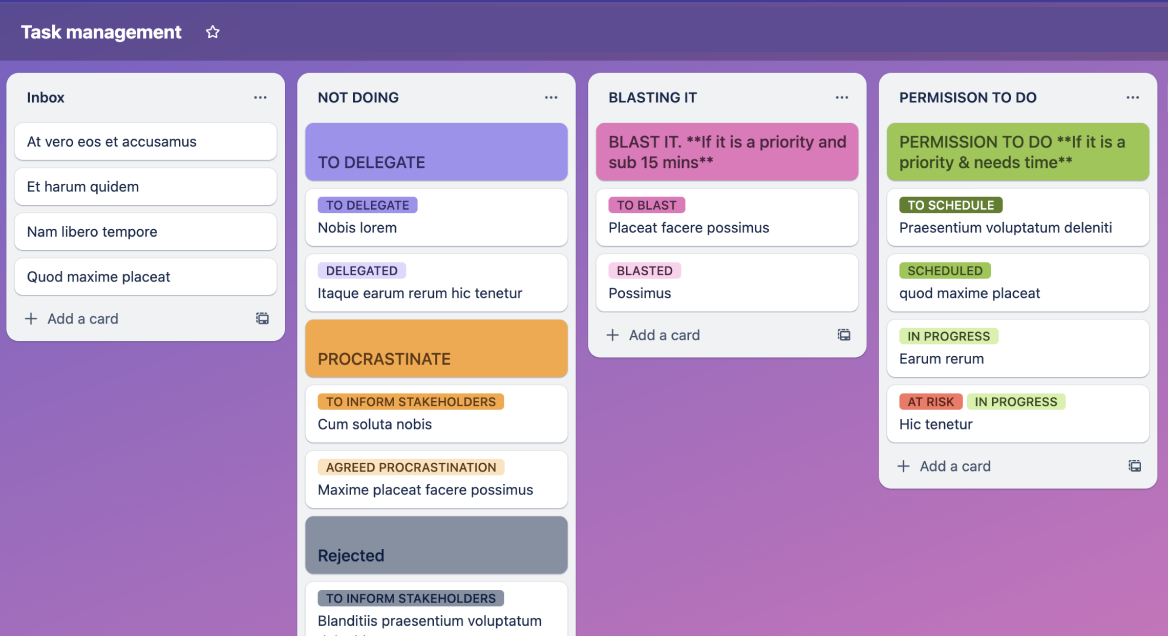
Throughout the week, tasks can pile up, leaving us feeling overwhelmed and struggling to decide where to begin. We've all experienced the burden of task saturation, when there's more on our plates than we can manage. It's time to take back control with the powerful "Task Blast Hour" method!
Imagine dedicating just one hour before the week's end to blast through your task inbox, clearing away a substantial chunk of your to-do list. This game-changing technique, also known as "Next Fastest Thing," revolves around focusing solely on the time it takes to complete tasks. By doing so, you'll free yourself from the shackles of overwhelm and position yourself for a smooth start to the following week.
So, let's get started!
Start with grabbing your favorite cup of coffee, put on those headphones, and set your Slack status to "Do Not Disturb." and opening up your trusty task management tool. Step by step, you'll prioritize each task, starting with the ones you estimate to be the quickest.
Ask yourself three important questions:
Can I Say No?
Assess whether the task truly needs to be done right now. Consider its alignment with your team or company's strategic goals. If it doesn't pass the test, confidently reject it. Inform the stakeholders, and gracefully move it to your "Rejected" category.
Can I Delegate?
For tasks that align with your priorities but can be handled by someone else, delegate like a pro! Identify the most suitable person or someone who could benefit from the experience, then pass the torch to them. Move the task to your "Delegated" category, and you'll be amazed at how efficiently things get done.
Can I Procrastinate?
Yes, you read that right – strategic procrastination! For tasks that align with your priorities but lack immediate urgency, consider postponing them. Move these tasks to your "Procrastinate" category and inform stakeholders with your well-reasoned approach. Surprisingly, some of these tasks may naturally fade away, saving you valuable time. For any that resurface with increased priority, move them to your "Permission to Do" category and tackle them when the time is right.
Embrace the "I Need to Do This"
And when it comes to tasks that unquestionably demand your attention, don't hesitate.
Embrace the "I Need to Do This" mentality. If a task can be completed in less than 15 minutes, blast it out right away by moving it to the "Blast It" category. However, for those that require more time or conversations, allocate them to your "Permission to Do" category. Organize meetings or block dedicated time on your calendar within the next two weeks to ensure they get done efficiently.
Tell me again, Why do Task Blast Hour?
Task Blast Hour empowers you to reclaim control over your tasks, maximize your productivity, and create space for rejuvenation. By following this method each week, you'll unlock newfound efficiency and enjoy a well-deserved sense of accomplishment.