#PRODUCT JUDGEMENT #WORKFLOW DESIGN #CUSTOMER RESEARCH
Catching a two-year redesign before it broke a 110k-user workflow
Ticketing was Qualtrics' core CX workflow — 110k MAU, 70k tickets a month, directly correlated with renewals. The redesign had been two years in motion before I joined, and had never been tested with real users. I flagged the risk, forced a fast validation cycle before GA, and let customers migrate on their own terms.
COMPANY
Qualtrics
ROLE
Senior Manager, Experience & EMEA Lead
TIMELINE
2021–2023
THE SITUATION
A core 110k-user workflow, redesigned for two years, never tested against real use
Closed loop ticketing let CX admins follow up and close out customer feedback issues — tickets auto-created from feedback against custom criteria. It was a daily, high-frequency tool: 110k MAU, ~70,000 tickets created monthly, with a strong correlation to renewals. This wasn't a feature people sampled occasionally — it was core operational infrastructure for the customers who used it.
When I joined in 2021, the team had already spent two years migrating ticketing off the legacy monolith and onto our new design system — necessary, overdue technical debt work. What it hadn't had, in two years, was any validation against how real users actually worked. A GA date was already in motion when I inherited it.
WHAT I DID
Flagging the risk before GA, not after
The first thing I did was name the problem directly: two years of redesign effort had never been tested against actual usage. For a tool this central to people's daily workflow, that wasn't a minor gap — any friction introduced would surface immediately and loudly, at scale.
Rather than letting the existing GA timeline run, I got the team — a PM and a junior designer working with me — to cut the rollout down to a small alpha and usability test it with real customers before any wider release.
"Cutting the GA rollout down to a small alpha, tested with real customers first"
WHAT TESTING SURFACED
Core user frustrations became apparent through rapid testing
The new UI had added an extra click into core, high-frequency actions, exactly the kind of friction power users notice and resent immediately, because it compounds across 70,000 tickets a month.
And the layout had been designed with generous whitespace for large external displays, while the actual user base was largely laptop-based — so the redesign felt less compact, not more capable.
Filtering logic was also broken in ways that mattered for daily triage.
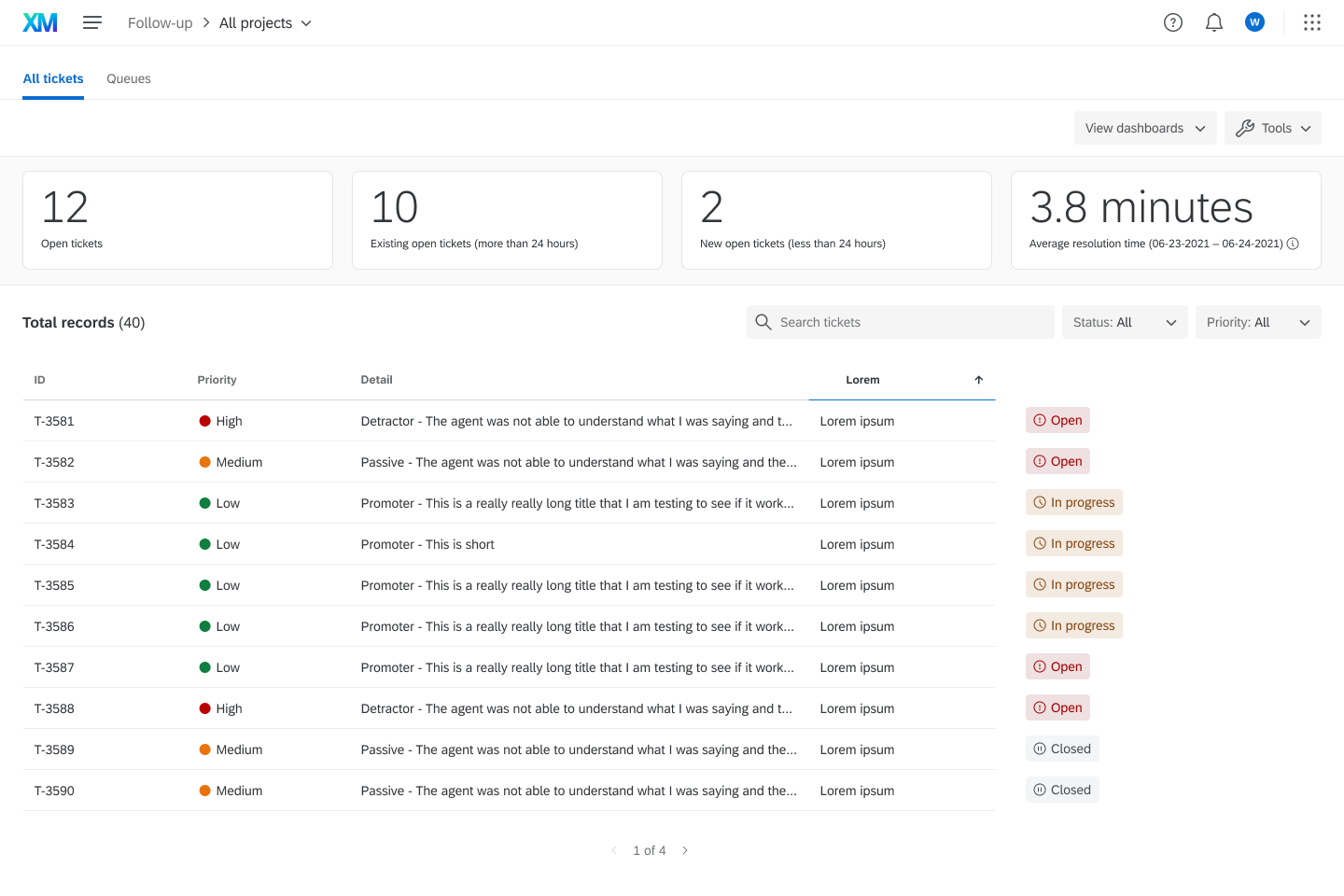
Mockup of the ticketing design
WHAT WE CHANGED
Fixing before scale, not after complaints
We tightened interaction density, fixed filtering, prioritised restoring bulk actions that had been dropped in the redesign, and built change management and onboarding support directly into the rollout plan — rather than treating training as a reaction to support tickets once people were already frustrated.
Choosing opt-in over forced cutover
Instead of forcing every customer onto the new experience on a fixed date, we ran GA as an opt-in migration. Customers decided when they were ready to move themselves.
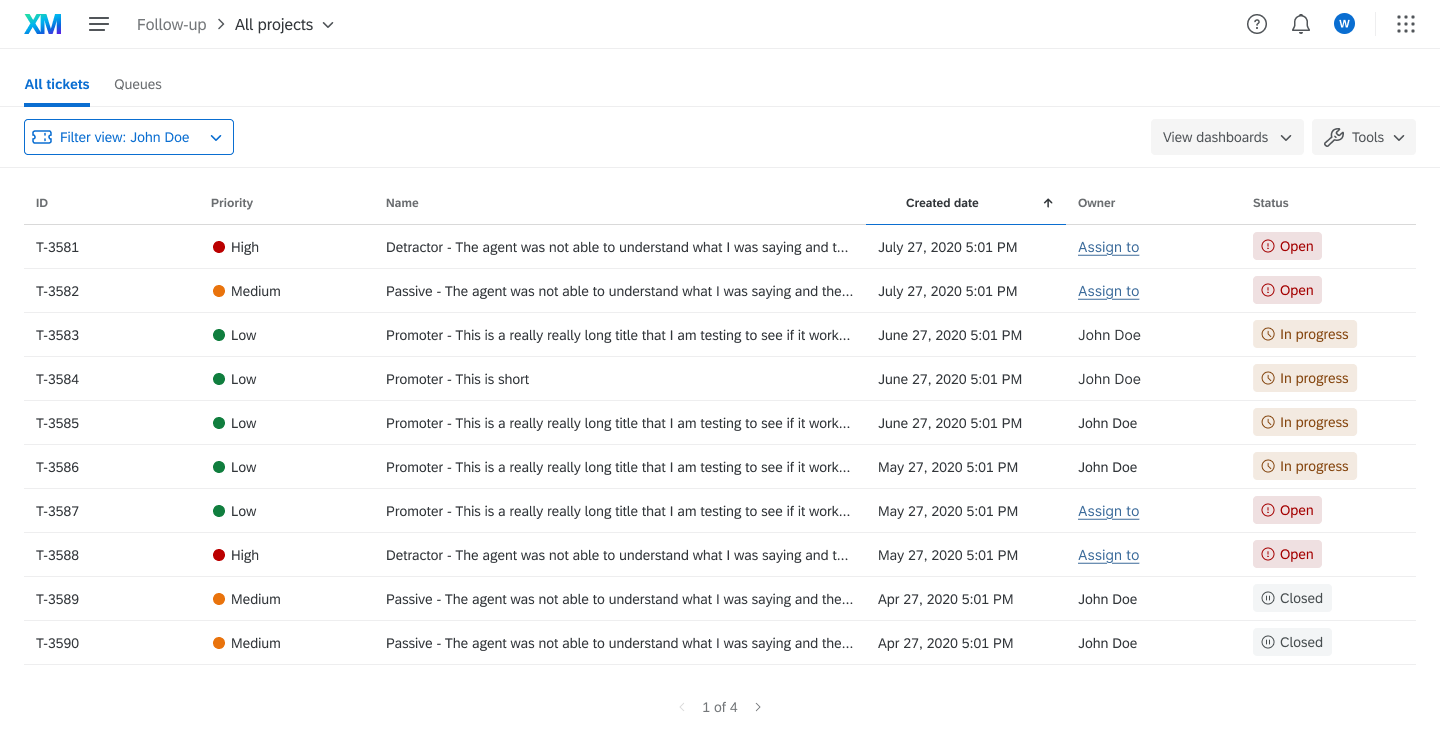
Mockup of the modified ticketing design
IMPACT
90% voluntary migration in three months — proof the experience actually worked
90% of customers voluntarily migrated to the new experience within three months of GA — a credible adoption signal precisely because no one was forced
Caught and corrected two years of unvalidated design decisions before they shipped broadly to a workflow with 110k MAU and a direct renewal correlation
Avoided forcing a disruptive migration onto exactly the power users most sensitive to added friction
WHAT THIS TAUGHT ME
The risk in inherited work isn't always visible in the work itself — it's in what was never tested. Two years of design effort can still ship broken if no one checked it against how people actually use the product day to day.
Letting users opt in is itself a confidence signal.