#PRODUCT DESIGN #PRODUCT STRATEGY #AI-NATIVE DESIGN
Defining where to play in a fragmented contact center offering
Qualtrics was expanding into Contact Center, then acquired Clarabridge — multiple teams building overlapping capabilities with no coherent product story and no clear direction. I ran rapid prototyping and validation across a wide range of ideas, then consolidated the strongest signal into clear experiences to build, resulting in ACV growth from $20M → $34M
COMPANY
Qualtrics
ROLE
Senior Manager, Experience & EMEA Lead, leading a team of designers
TIMELINE
2021–2023
THE SITUATION
Multiple teams building the same thing, with no one able to decide who owned what
Qualtrics was expanding into Contact Center. Early features existed but adoption was low and fragmented across products. Then came the acquisition of Clarabridge — adding AI analytics and conversation data, and a lot more overlap.
Multiple teams were building similar capabilities in parallel. UX was inconsistent across journeys. There was internal confusion about ownership, and decisions were slowing down under the politics of who owned what.
This wasn't a UX problem to fix. It was a strategy and organisational alignment problem that needed a UX lens to solve
EXPLORING MULTIPLE DIRECTIONS
No shortage of ideas — the gap was strategic focus, not imagination.
I was part of the Contact Center Strategy group — PM Director, Eng Director, Marketing, Data Science, and me for UX. My focus was defining and leading the concept development across the areas: assisting the frontline agent to improve their quality and speed of their support and reduce the coaching and admin burden for the agents manager.
The direction was fuzzy going in — plenty of ideas floating around off macro trends in AI automation, tool consolidation, and rising pressure on service efficiency, but no shared view of what was actually worth building. I sketched a wide range of directions — spanning agent coaching, post-call analysis, live in-call assistance, team performance and recognition, and surfacing emerging trends — and ran rapid concept testing with customers against the sketches themselves, not just ideas on a slide.
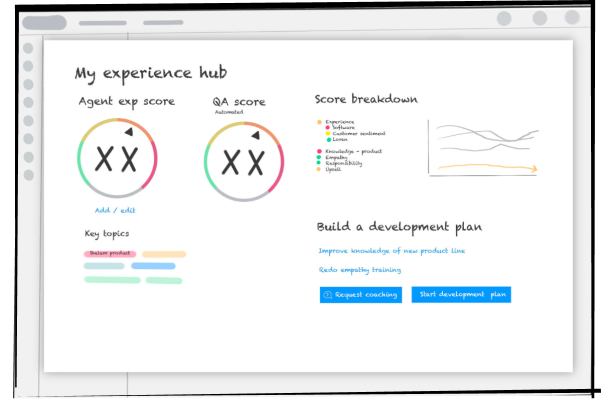
Sketch of Agent Experience Hub
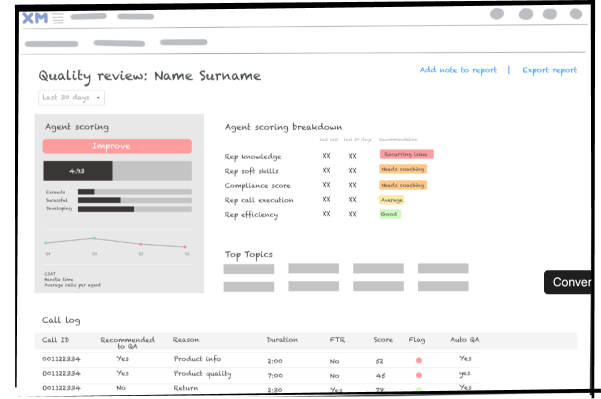
Sketch of Quality Review Experience
Image note
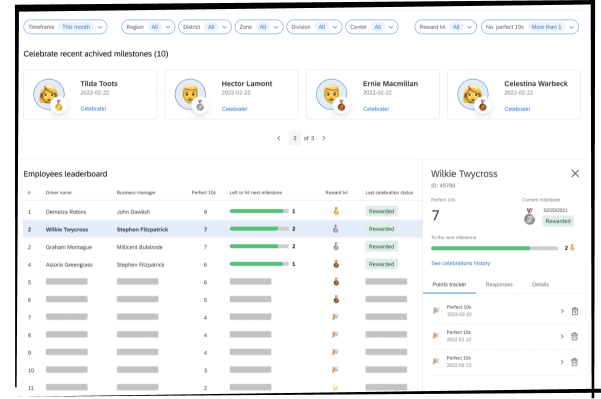
Sketch of Recognition table
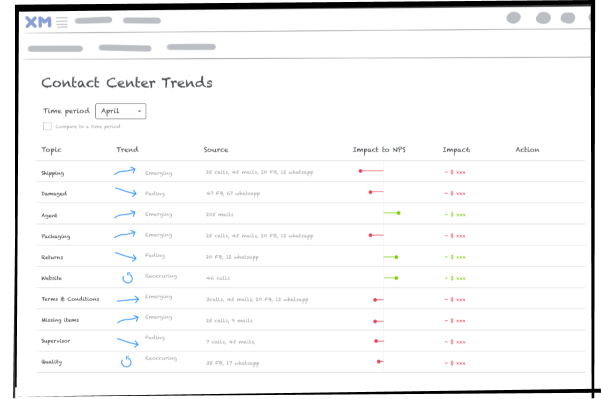
Sketch of Emerging Trends
Two things came out clearly: agents needed insight delivered in context, not another dashboard, and any new tool had to sit inside what they already used or it wouldn't get adopted. That reframed the whole direction — from "here is your data" to "here's what matters and here's what to do."
CONSOLIDATING TO 2 BETS
Learnings converged into 2 strong directions
Testing didn't point to a pile of separate products, it kept surfacing the same underlying needs from different angles. Rather than chase every thread, I consolidated the strongest signal into two directions: one for managers, one for agents. Both went from sketch to mocked-up.
I took both through the early concept work and customer validation myself. Once a direction was proven, I handed it to designers on my team to refine into the mockups below — staying closely involved in the direction and the decisions, while they did the detailed design work. That split mattered: I could keep generating and testing the next direction while the team took validated concepts further, rather than everything routing through me end to end.
Manager Portal
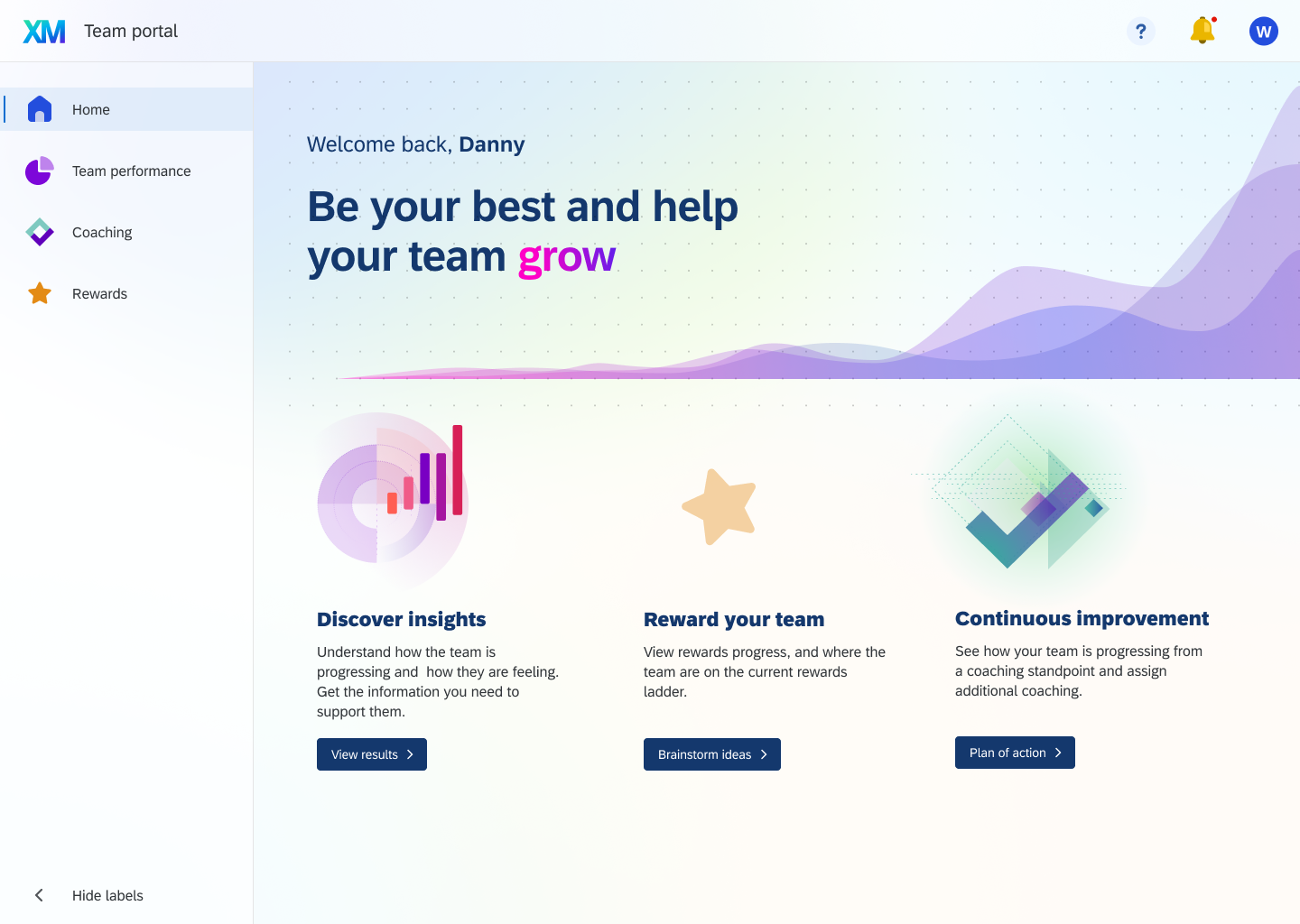
A central desktop space for managers to review team performance, coach and recognise individuals, see how their team stacks up, and stay ahead of trends worth knowing about. A manager doesn't need a handful of separate tools to do those things. They need one place that does all of it.
Agent Experience Hub
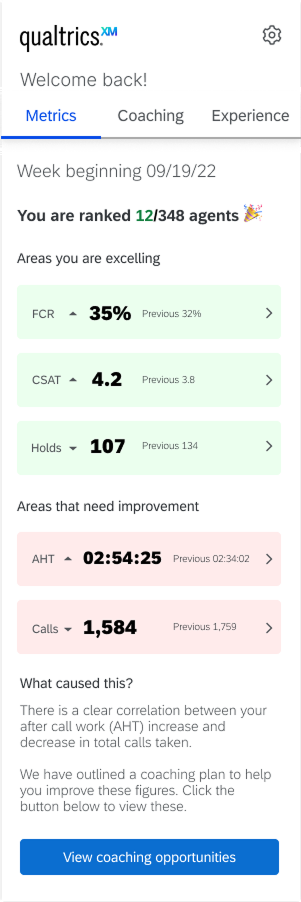
The agent-facing counterpart, combining live assistance during calls with post-call analysis and coaching. Agents needed help in the moment of the call, and a fast, specific read on how that call went right after — not a delayed report days later.
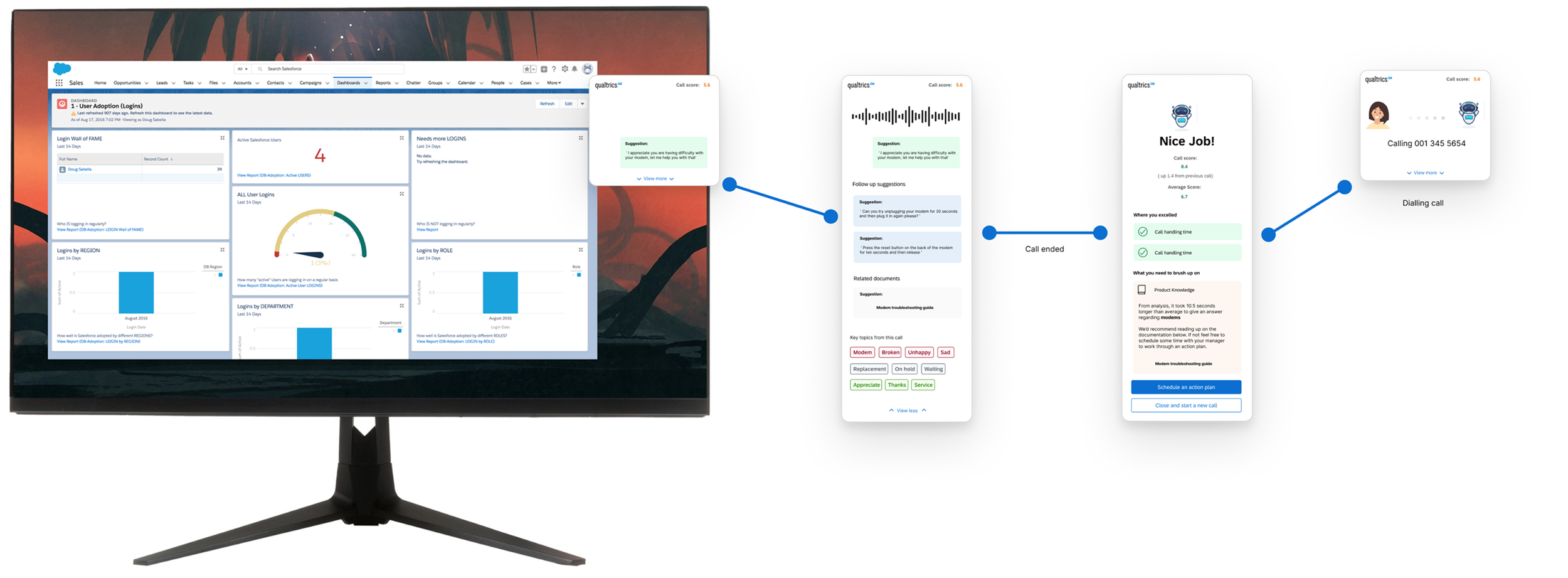
Experience Hub mockup: live in-call assistance alongside post-call analysis and coaching, in the agent's own workflow.
Anchoring ownership in user value, not features
Mapping the lifecycle around what the user experiences, not what teams were shipping
The other piece of clarifying direction was building a contact center journey map — but anchored in the experience and value at each stage from the user's perspective, rather than a list of features. Shifting the lens that way is what let the group agree which team or pod held responsibility for which part of that value, instead of arguing over who owned which feature.
That reframe; value and experience first, feature ownership as a consequence of it rather than the starting point — became the shared reference the group used for roadmap and ownership decisions going forward.
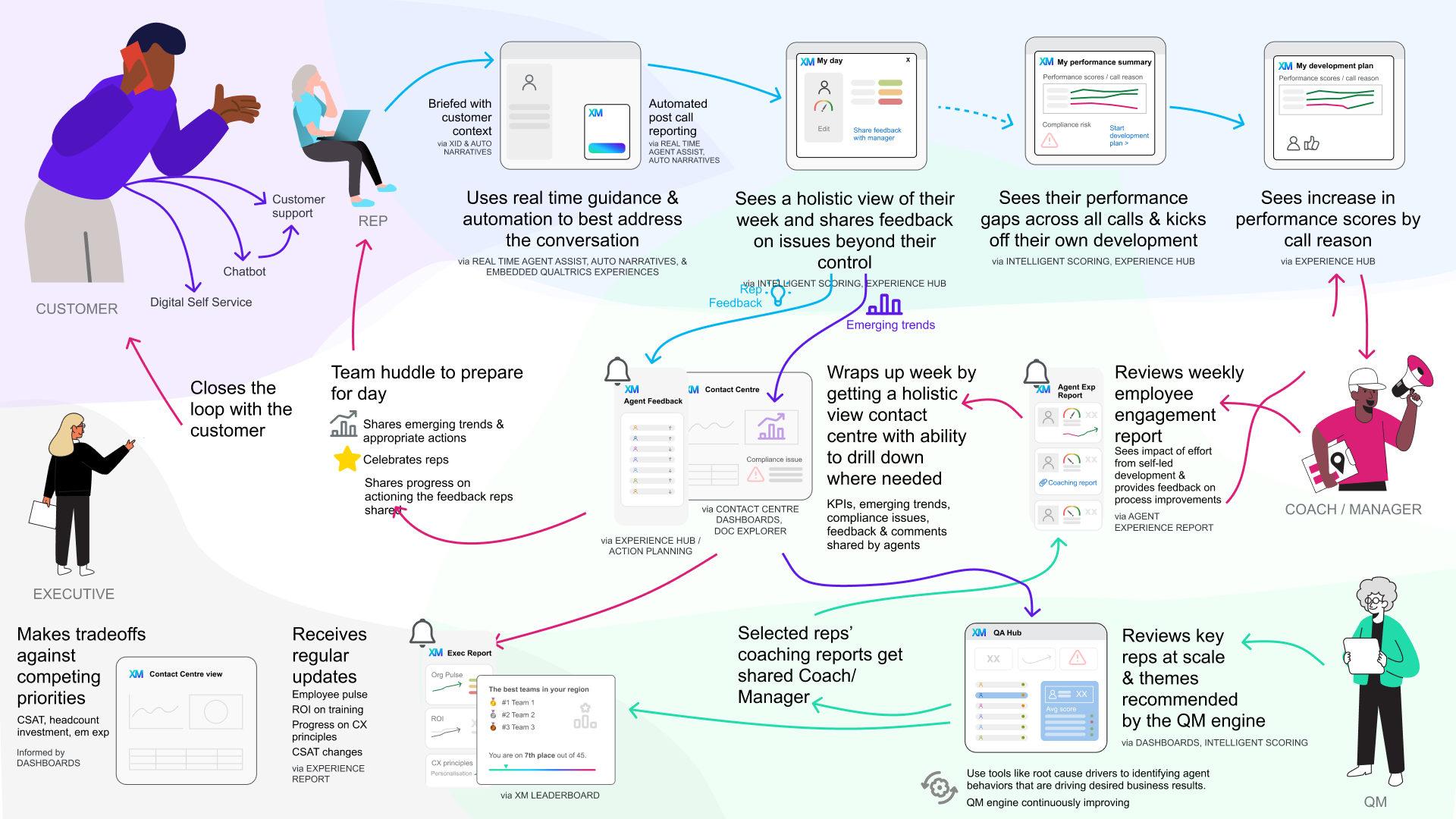
The journey map highlights the ideal experience from the agents, the agents manage and the QMs POV
IMPACT
ACV nearly doubled, MAU up 75%, and a clear 2022–2024 line on what not to build
ACV growth: $20M → $34M
MAU: 26.7k → 46.8k
MAB: 364 → 406
Shipped: frontline agent assist, real-time agent assist, quality management
Defined contact center product strategy for 2022–2024, clarifying where to invest and what not to build
WHAT THIS TAUGHT ME
Strategy without UX is abstract. UX without strategy is fragmented. You need both to get real product direction
The harder lesson: adoption is constrained by environment, not just design. Agents won't adopt a tool that doesn't fit how they already work, no matter how good the tool is.
Leading a design team didn't mean stepping back from the work — it meant knowing which parts I needed to do myself (fast concept generation, customer validation) and which parts were better handed off once proven, so the team could take things further while I moved on to the next direction.